


By Nagomi Security
Moving form findings to verified outcomes.
Security teams often have ample tools that identify exposure. The harder challenge is knowing whether that exposure remains closed as change occurs, or if changes reintroduce risk that goes undetected by traditional tools.
Most security programs are not set up to answer that question. They are designed to surface findings, rank them, and move them into a workflow. That happens, then tickets are created, SLAs are tracked, statuses are updated. What remains unclear is whether risk has actually improved.
This is the gap closed-loop exposure management is meant to address. It is less about improving detection or prioritization and more about ensuring that the system produces verifiable outcomes.
Why Vulnerability Management Isn’t Exposure Management
It is easy to assume that once an exposure is identified and prioritized, the rest of the process is straightforward. In reality, this is where the current system is inconsistent.
For most SecOps teams today, an analyst investigates a vulnerability and builds context around it. The analyst has the knowledge to understand which assets are affected, how they might be exploited, and why the potential exploit matters to the business. However, given the manual processes in place, that context does not always survive the transition into triage. By the time the issue reaches an engineering team, it’s often been reduced to a ticket that contains limited detail and unclear urgency.
Even when the work of fixing an issue begins, constraints always exist: Patching may be delayed. Ownership may be unclear. Fixes may be partial or misapplied. In many cases, there is no independent validation process that explains whether the exposure has been addressed in a meaningful way.
On the surface, the exposure management program appears active. Tactically, it’s tricky to determine what has truly improved. It may help shed light on how many individual vulnerabilities
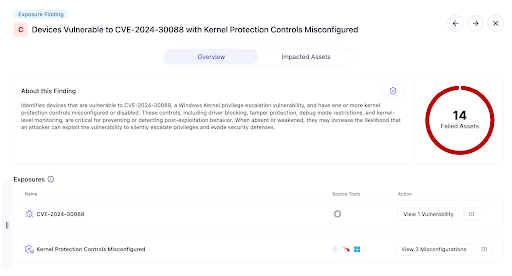
were triaged, but it can’t show operators where exposures exist — where wider security issues like missing controls, misconfigurations, and ineffective policies remain — leaving an entry point for attackers.
A Closed Loop Requires Continuity and Validation
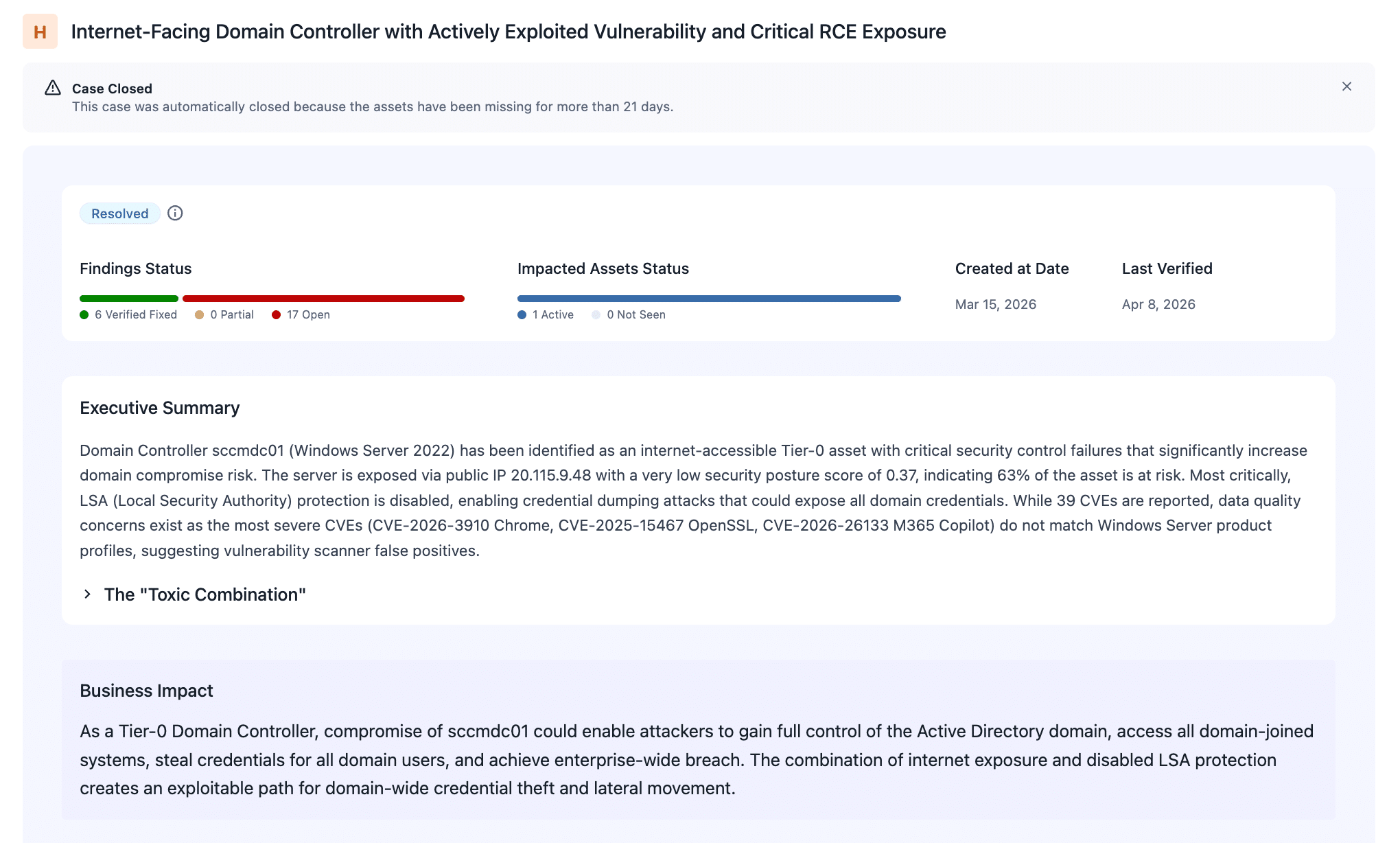
A closed-loop model moves organizations from tracking and dealing with technical flaws and changes how exposure elimination is defined. An exposure isn’t considered addressed because it’s been acknowledged or assigned; it’s only addressed when the conditions that made it exploitable have been removed or constrained. Importantly, the change must be verified and controls must be in place to resurface the issue if it reappears.
For that to happen, the system needs to maintain continuity from investigation through remediation and into validation. It also needs to account for the reality that ideal fixes are not always immediately available. This is the true definition of “closed-loop” and why today’s exposure management must incorporate the elements to focus on the broader attack surface.
Nagomi’s commitment to closed-loop verification is reinforced through two recent updates aimed at these requirements.
Complete Context from Finding Through Remediation
Connected Remediation Flows focus on a simple but persistent problem: Exposure context is easily lost as issues move between tools and teams.
In most environments, once an analyst discovers a finding, it’s entered into a vulnerability record, then into a separate ticketing system. Each step requires redefining the issue. Details about affected assets, business ownership, or the original exposure context are often reconstructed or omitted, lending to the high probability of change and oversimplification. This is where misalignment begins.
Connected Remediation Flows ensure the exposure context remains intact. From the Nagomi platform, an analyst can start with a finding, move seamlessly to investigating the underlying issue, review impacted assets, and initiate a fix directly from the same workflow. The scope of the issue, such as the business unit or exposure set it came from, stays intact as work progresses.
The results are clear.
Faster fix times: Fixes can be applied sooner because analysts don’t need to rebuild the case for remediation at every step of the process. The next analyst, therefore, gets a clearer picture of what needs to be fixed and why, and less back-and-forth to clarify scope or priority takes place.
Increased efficiency: Fewer issues will stall during handoff from person to person, team to team. When investigation and action are part of the same automated flow, there are fewer points where work can be dropped or deprioritized.
Reduced risk: The net effect is not just efficiency (though that’s a major gain for most overworked teams); it’s a higher likelihood that high-risk exposures will be closed first, driving down risk, and ensuring the organization can continue regular operations.
Reducing Risk When Patching Is Not Immediate
The second constraint removed by the introduction of Nagomi’s Connected Remediation Flows is more structural than procedural. As an Ops professional knows, patching is not always available on the timeline security teams would prefer.
Change windows, dependencies, and operational risks delay updates. During those timeframes, the exposure remains. In an open-loop system, the process effectively pauses. The risk remains.
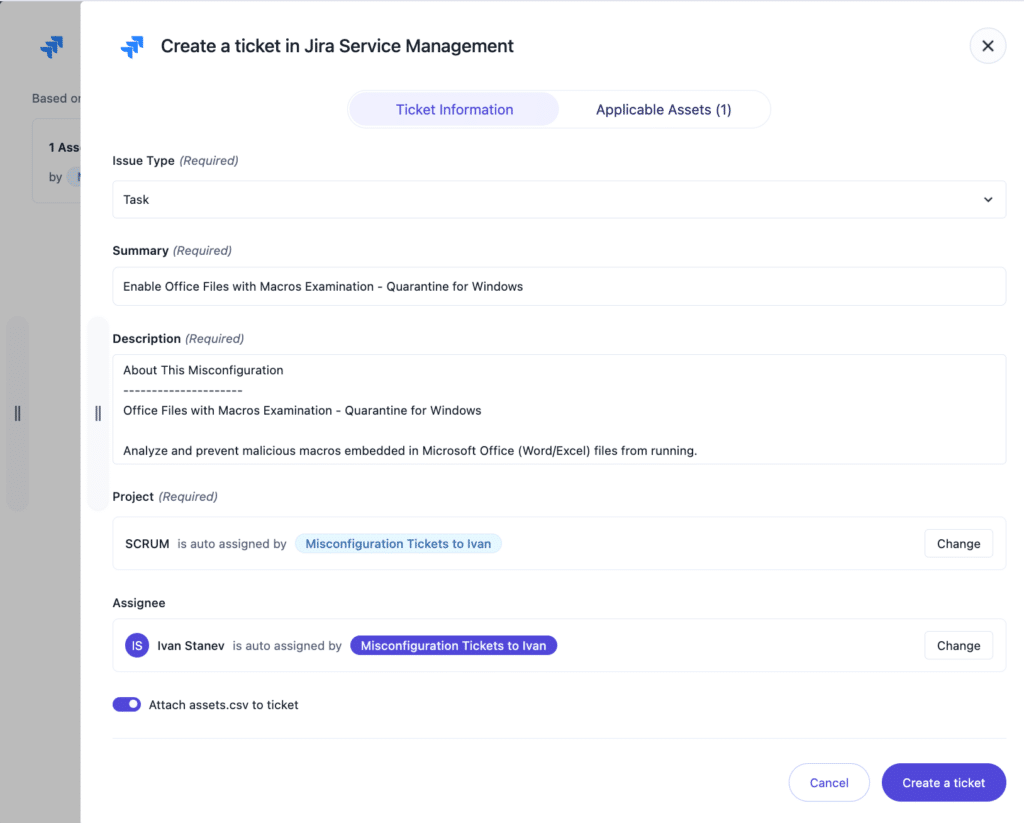
Control-Based Mitigations in Nagomi are designed to keep the process of exposure reduction moving forward despite inevitable obstacles. Rather than waiting for a patch, Nagomi identifies actions that can reduce the likelihood or impact of exploitation by applying controls that already exist in the environment.
These actions fall into two categories.
- Closing coverage gaps. If a subset of affected assets is missing a relevant control (such as endpoint protection), Nagomi surfaces that gap and allows a contextualized coverage ticket to be opened.
- Hardening existing controls. If a configuration on affected assets makes exploitation more likely, the system highlights that misconfiguration and provides a path to correct it.
What makes this useful is that these recommendations are not generic. They are tied to the specific assets affected by the exposure and grounded in how those assets would be attacked. The reasoning is connected to known attack techniques, which makes the remediation action easier to explain and prioritize.
For a SecOps team, this expands the set of viable responses to any given exposure. The decision is no longer limited to when a patch can be applied. Instead, the scope broadens to include deploying controls, policies, and configuration changes; it can mean changing or updating access permissions or segmenting/isolating files, folders, or even entire networks to remove the opportunity for attacks to progress.
In essence, Control-Based Mitigations expand the options for systematic risk reduction without disruption.
From Individual Fixes to Control-Level Impact
One of the more meaningful shifts in Nagomi’s control-first model is how remediation is evaluated.
SecOps teams have become accustomed to working through vulnerabilities one at a time. This is necessary, but it’s tedious and inefficient. And it doesn’t account for when a single control gap or misconfiguration contributes to multiple exposures across a legion of assets.
By surfacing high-impact mitigations, Nagomi highlights actions that conclusively reduce risk across a broader set of issues. Instead of focusing exclusively on individual CVEs, teams can identify a control change that improves the overall security posture.

What Closed-Loop Changes for SecOps
A closed-loop model does not simplify the environment. It makes the system more concretely accountable to outcomes.
SecOps teams spend less time reconciling whether issues were fixed and more time deciding which actions will have the greatest impact. Backlogs behave differently because items are not simply moved through a queue; they are either resolved with evidence or reintroduced with updated context.
The interaction with engineering teams also improves: Alerts and tickets now include necessary context, which reduces confusion and ambiguity, and increases the likelihood of appropriate and timely remediation.
From a leadership perspective, the shift is even more pronounced. Risk reporting can move beyond findings and ticket counts to show how exposures have changed as a result of specific actions. This creates a more defensible position when communicating risk to the business and shows that security aligns with business objectives rather than exists solely to eliminate exposures in a vacuum.
Why Closed Loop Matters Now
As environments become more dynamic, the volume of exposures will continue to grow. AI-assisted development, ephemeral infrastructure, and distributed systems all contribute to a higher rate of change.
In that context, a system that only identifies and prioritizes issues will struggle to keep up. The limiting factor is not awareness — it’s the ability to consistently translate awareness into validated outcomes.
A closed-loop approach with Connected Remediation Flows and Control-Based Mitigations ensures that the work being done in SecOps environments measurably affects the business and risk in a positive and productive way. That’s a higher bar than most programs are designed to meet today. It is also the one that matters.
See Nagomi in action at nagomisecurity.com