Turning Threat Intelligence Into Continuous Exposure Investigation

Recorded Future gives security teams a view of threats they can’t extract from their own telemetry alone, correlating threat actors, campaigns, infrastructure, vulnerabilities, and techniques across more than a million sources. Nagomi brings that intelligence into customers’ live environments to help enterprises determine which threats apply to their organization and infrastructure, whether existing controls are in place and configured to stop them, and what needs to change.
Together, Nagomi and Recorded Future connect external threat intelligence with asset, identity, and control intelligence, turning knowledge of attackers and their TTPs into validated, actionable exposure intelligence.
The new partnership automates a process that has historically required analysts to connect the dots themselves, across teams. CTI analysts who identify which threat actors are targeting the organization and how. SecOps analysts who determine whether the conditions for an attack exist in the environment. Forensics analysts who may need to investigate further when the available evidence isn't enough. And remediation teams who act on the findings, and someone has to verify that the exposure actually closed.
The integration of Recorded Future and Nagomi connects those steps so threat intelligence can automatically drive an investigation rather than start another manual handoff.
From Curated Intelligence to Environment-Specific Investigation
Recorded Future’s intelligence reports provide extensive detail about a campaign, including the threat actor, techniques, vulnerabilities, infrastructure, and organizations or industries targeted. While this is a crucial foundation, what happens next determines whether the organization can act on the intelligence to eliminate exposures and business risk.
For instance, a CTI analyst may know a threat actor is targeting the organization’s industry, the techniques used, and the vulnerabilities involved. SecOps, however, needs to answer how the intelligence applies in their specific environment and what would allow or prevent an attack from propagating throughout their networks.
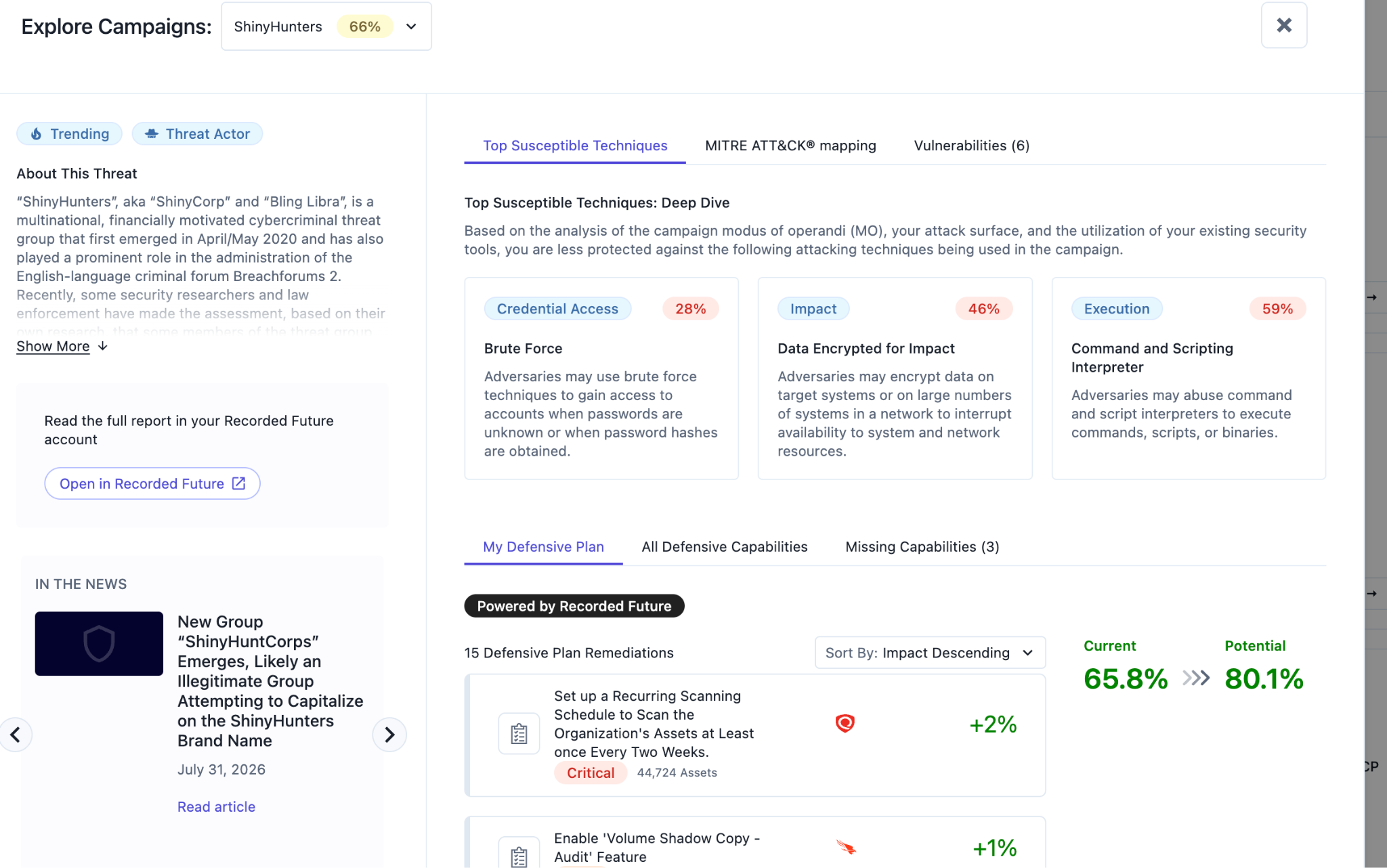
Through the partnership, Recorded Future intelligence gives Nagomi's autonomous agents deep context for their investigations..
The Nagomi Agentic Exposure Operations platform connects to the customer’s security tools through APIs and provides a continuously updated view of the customer’s assets, identities, controls, and configurations. When change in the environment creates a potential exposure, the agents automatically investigate a campaign without requiring SecOps or VM to turn the intelligence report into a series of searches across separate systems.
For example, Recorded Future might identify a new threat actor that targets the organization, along with the techniques and CVEs linked to that actor. Nagomi examines the conditions that determine whether those techniques could succeed in the customer's environment and under its policies:
- Which assets have vulnerable software?
- Are those assets exposed to the internet?
- Is the right control on the host?
- Is it blocking or only alerting?
- Has anything changed since the last check?
- Does the asset matter, and is anyone exploiting it?
- What evidence is available to support all the above?
A forensic investigation identifies the assets involved, business context, the control expected to prevent the attack, the configuration behind that control, the owner responsible for remediation, and the tools already in place to address the exposure.
For CTI, the result adds environmental context to external intelligence. For SecOps, it provides the evidence needed to determine whether the threat can progress.
Risk Depends on the Controls Around the Vulnerability
A campaign assessment may start with a CVE because affected software is relatively easy to identify. But the vulnerability alone doesn't establish whether an attacker can use it.
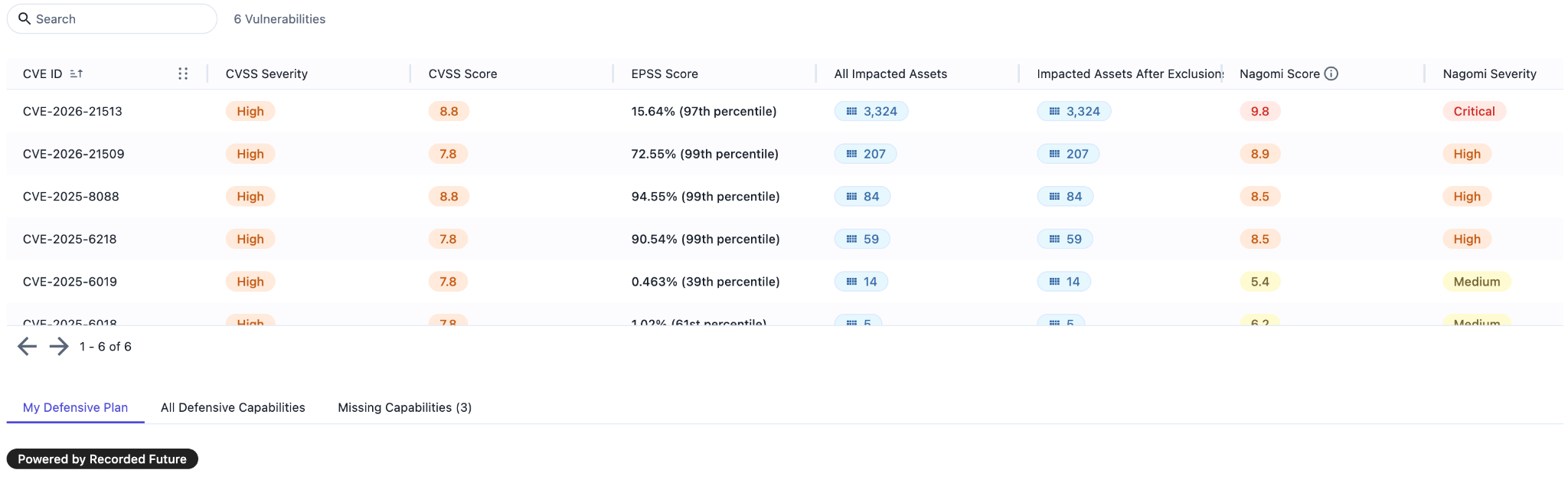
In this scenario, Nagomi starts with the attack technique and examines the controls an attacker would encounter along the way.
Nagomi’s Illusion of Maturity research found that 91% of assets passed vulnerability assessments while more than 75% of organizations had gaps in core controls covering areas such as MFA, EDR configuration, and endpoint policy.
Only about 30% of assets had strong coverage across identity, endpoint, and security awareness at the same time. In other words, passing a vulnerability assessment doesn't establish that the controls needed to prevent an attack are configured correctly in every organization’s environment.
An asset can pass every vulnerability assessment while its EDR agent has stopped reporting. MFA can be enabled across a directory while important accounts remain outside the effective policy. An endpoint policy can be relaxed for troubleshooting and never restored.
None of those conditions necessarily creates an exposure.
Control context can also change remediation priorities. Suppose a campaign includes an actively exploited CVE that affects software in the environment, but an endpoint control is active and configured to block the technique. Nagomi identifies the exposure as currently contained by that control.
The vulnerability still needs to be addressed, but the CVE can move into the normal remediation process while Nagomi continues to verify that the compensating protection remains in place.
Continuous Investigation Across Teams
The same process applies when the starting point isn't a vulnerability.
When Recorded Future surfaces exposed credentials tied to workforce or high-value identities, Nagomi’s exposure rules flag credentials that warrant attention. Its agents investigate the affected identities, assess business criticality and MFA coverage, and examine the controls that protect those accounts.
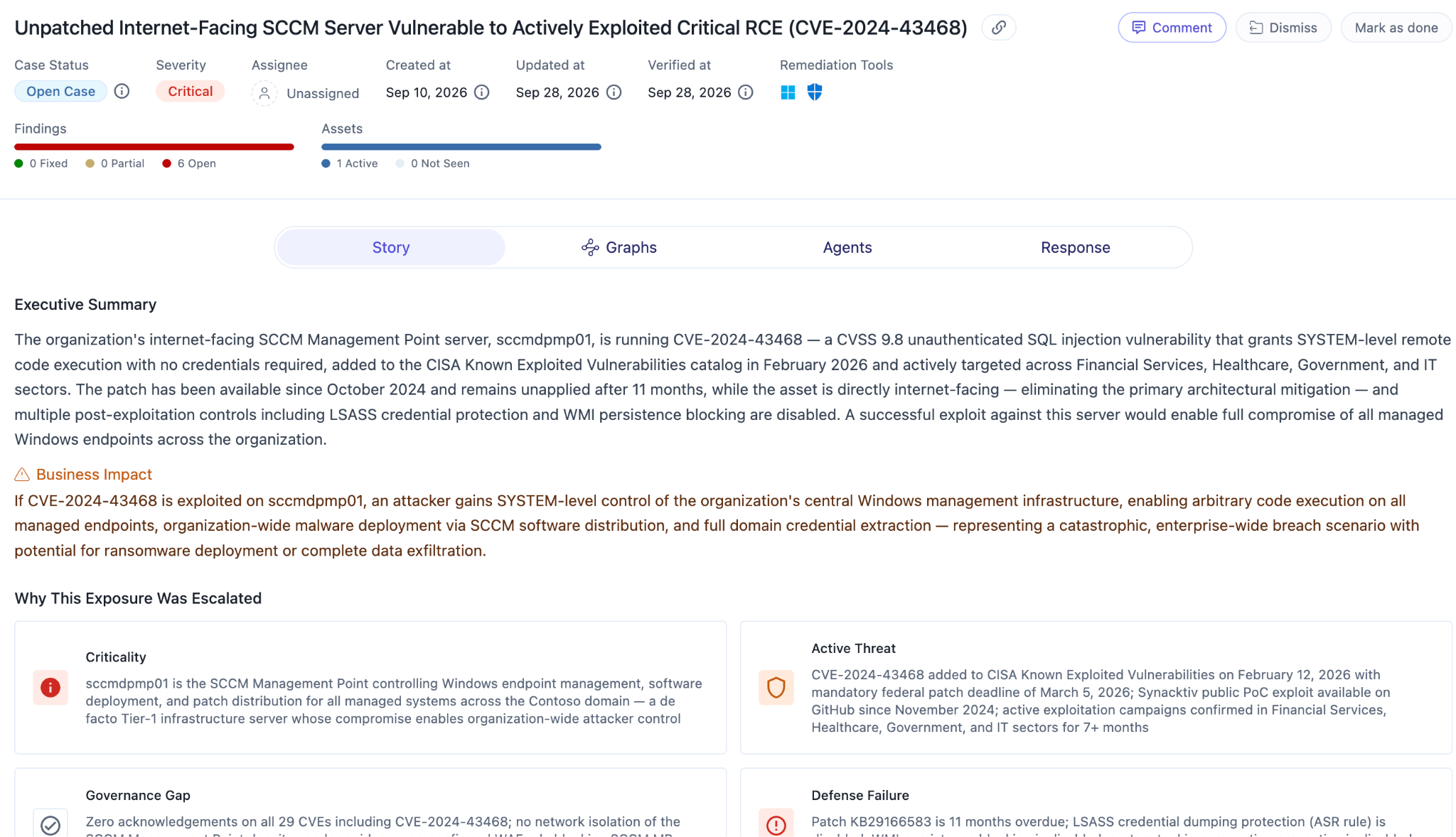
Accounts that require action receive a remediation path and an owner. Others can close with evidence showing why the exposure isn't currently actionable.
The investigation can also restart when the threat or environment changes.
A new attack technique can be mapped to a threat actor an organization already tracks. An old CVE can become weaponized. A new threat actor targeting the organization can emerge. Credentials can appear in a newly discovered dark web dump.
Meanwhile, a deployed control can stop reporting, a policy can be relaxed and never restored, a new asset can appear without expected policies, or an identity can fall outside the team’s MFA policy.
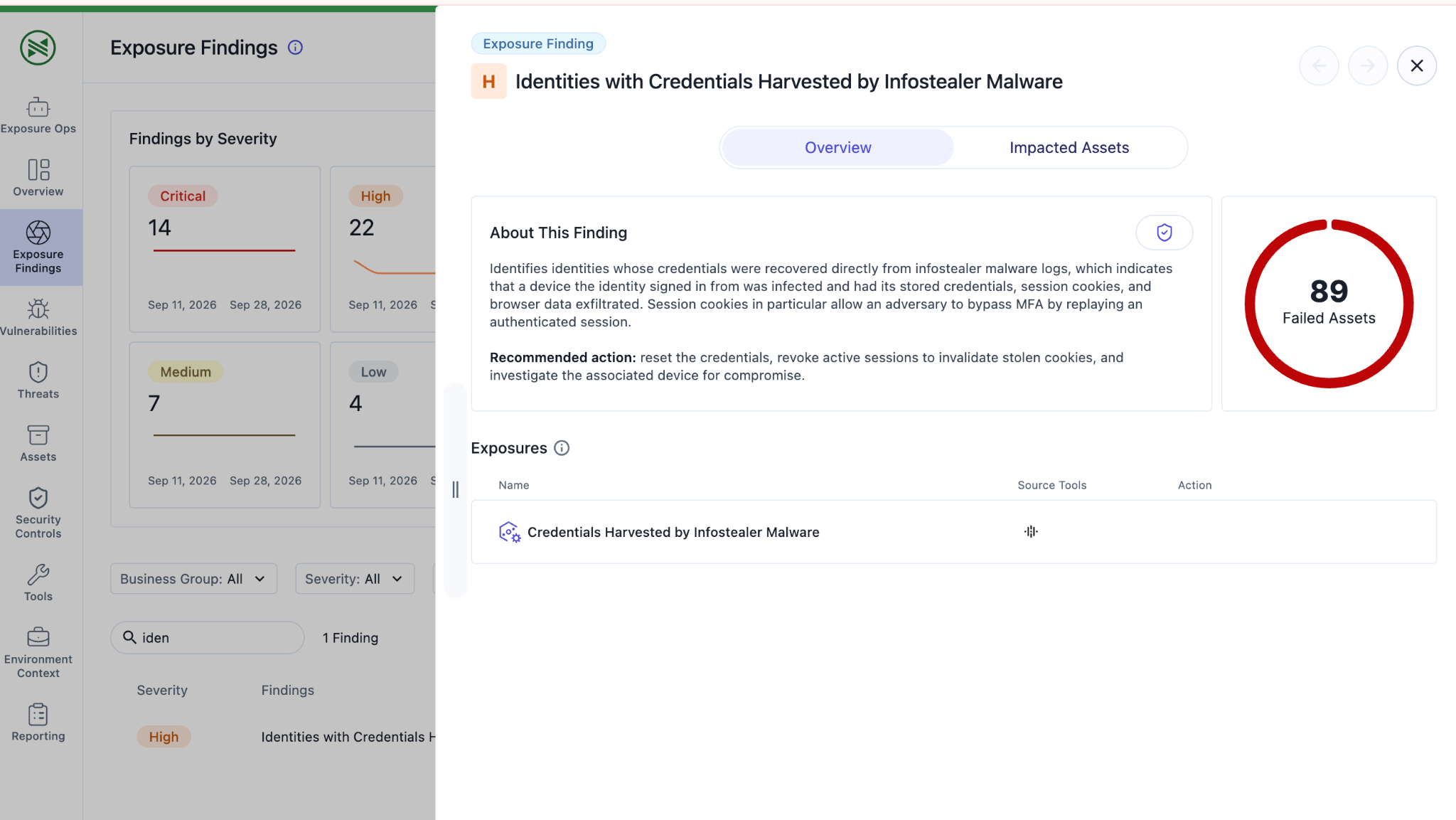
Nagomi’s agents investigate those changes automatically. New intelligence dispatches a fleet of agents into the environment, while an environmental change can trigger another investigation when it affects an active exposure.
The result is a shared investigation across CTI and SecOps, with forensics able to work from the same threat scenario and evidence when deeper examination is required.
From Generic Intelligence to Validated Exposure Ops
Mature security teams can't settle for generic threat intelligence or the uncertain outcomes that accompany it. Attacks happen too quickly and too often, and CTI, vulnerability management, and SecOps teams already face more alerts than they can confirm against their own environments. Every alert that may or may not apply to the organization still costs time to rule out.
The Recorded Future and Nagomi partnership gives joint customers:
- Curated intelligence: Recorded Future identifies the threat actors that target the business, along with the techniques and CVEs linked to them
- Answers from the live environment: Nagomi's agents determine whether an actor’s TTPs could succeed against the organization's actual assets, identities, and controls
- Priorities based on control context: teams can see when an active control contains an exposure and focus on higher-priority threats
- Faster response: exposure rules flag leaked workforce credentials, and agents assess business criticality, MFA coverage, and the controls around each account
- Evidence behind every conclusion: each assessment in Nagomi traces to data from customers’ own security tools, with documentation of the asset, control, configuration, and technique
- Fewer manual handoffs: CTI, SecOps, forensics, and remediation teams work from one shared investigation
With Recorded Future built into Nagomi's agentic investigations, customers gain the strongest exposure operations play: intelligence about the threats that matter to their business, validated against their own environment, with an owner and evidence behind every finding.