Are your security controls actually in place where it matters?
Know if your assets are actually protected


Move from triaging every finding to fixing only what's actually exploitable.
of breaches now start with an exploited vulnerability - the #1 initial access vector.

of published CVEs are ever exploited in the wild. Teams triage all of them.

Attacker time-to-exploit vs. average time to remediate.

The Noise Crisis
Everything Looks Critical
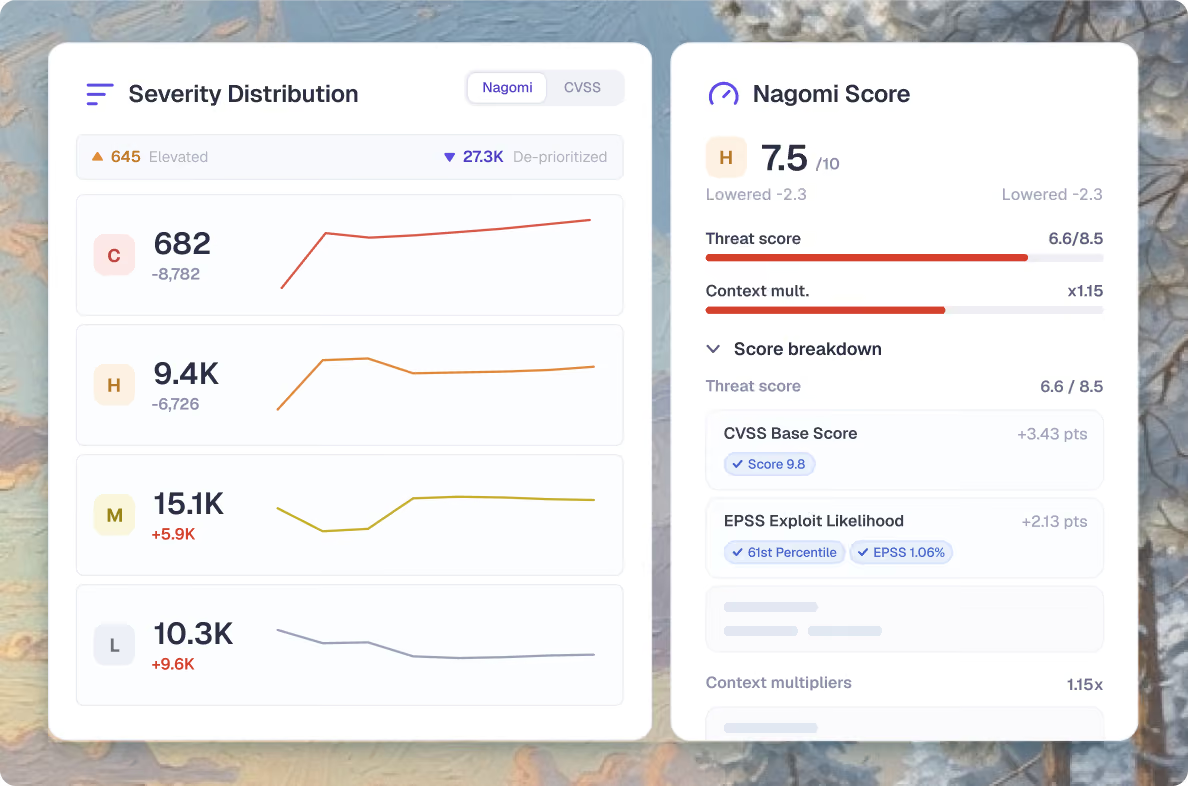
Scanners rank findings by a score that ignores your environment. A 9.8 on a test box outranks a live risk on a domain controller.

The Exposure Funnel
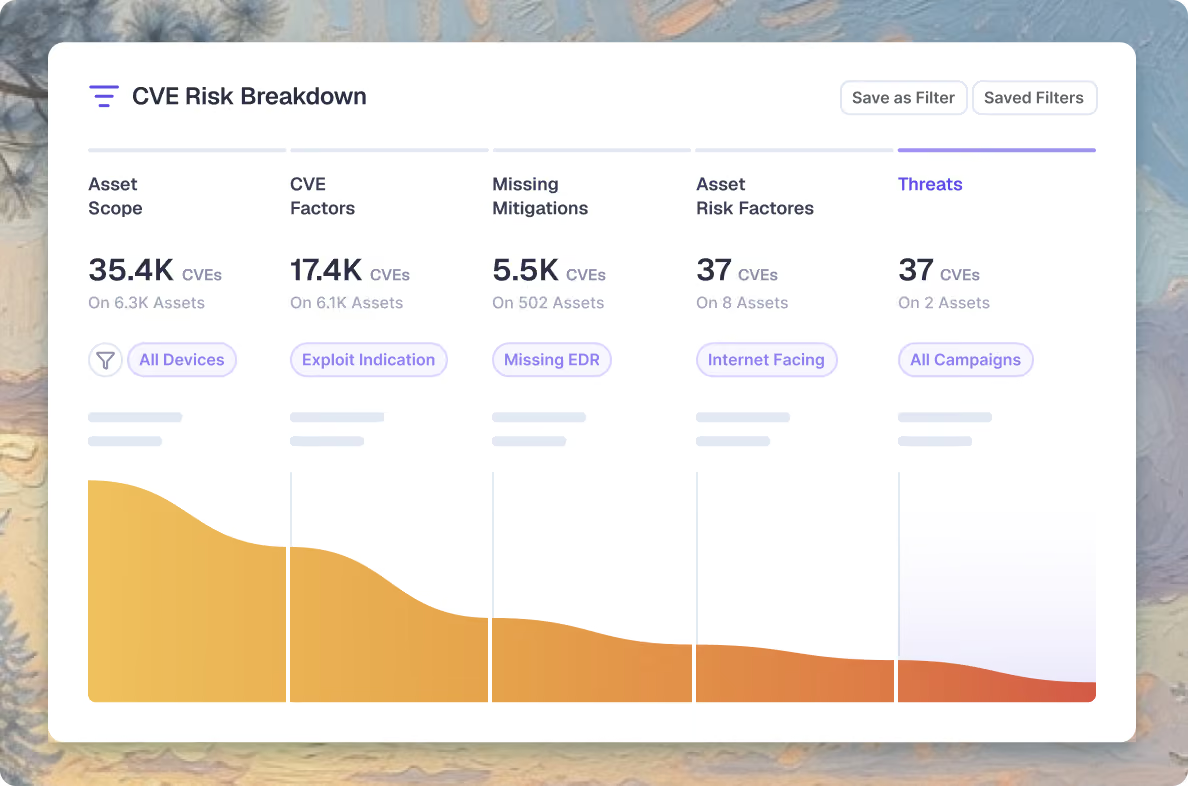
Every scanner feeds one funnel: deduplicated, filtered for reachability, and scored against the controls already reducing your risk.

The Investigation Bottleneck
The Two-Hour Verdict
Qualifying one CVE means checking EDR, privilege, ownership, and firewall rules across four consoles. Two hours later, thousands still wait.
Agent-Run Forensics
Agents investigate every confirmed exposure - exploitability, live EDR and identity data, adversary relevance - and hand your analyst a finished case.

The Closure Illusion
Closed ≠ Fixed
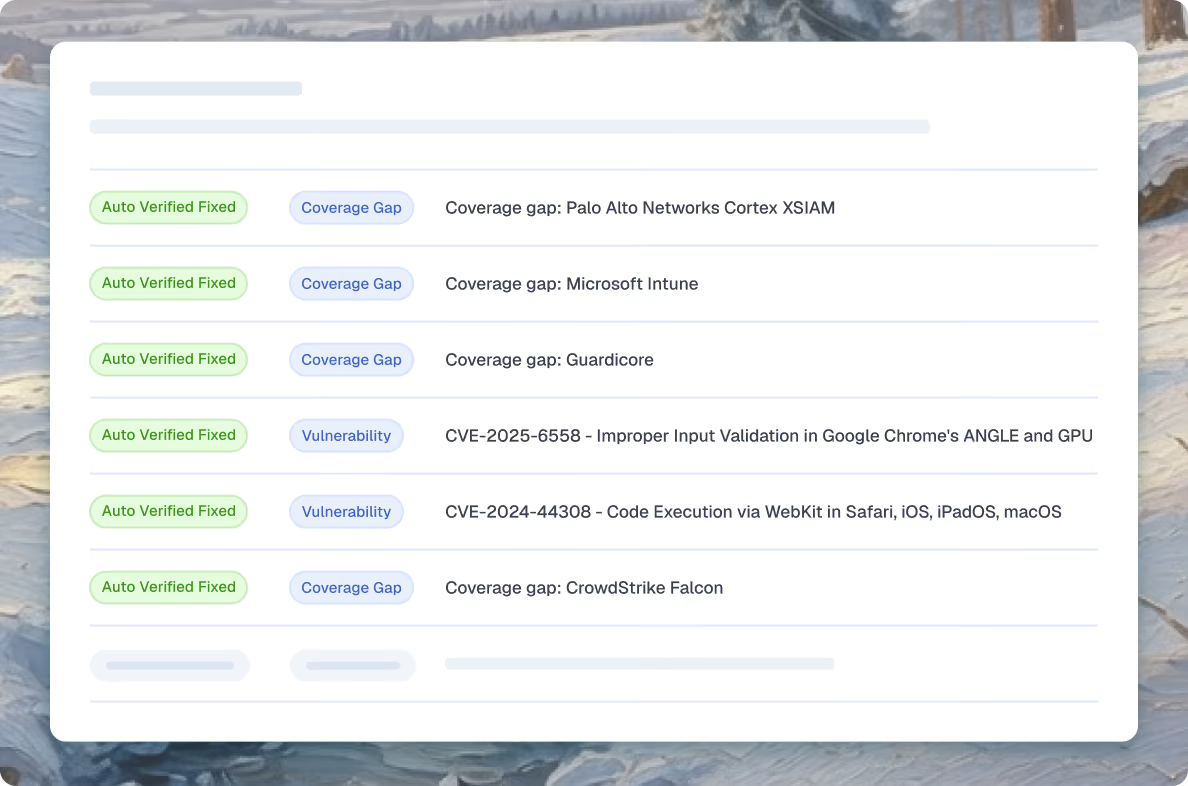
You wrote the ticket, chased the owner, closed it. Then the config drifted back. You reported remediation you can't prove held.
Proven Closure
Agents revalidate every fix continuously. If the exposure returns, the case reopens automatically - closure proven, not assumed.
Full Investigation
What took an analyst two hours across four consoles.
Analyst Days Returned
Manual investigation work absorbed by agents every quarter, across our customer base.
Criticals Deprioritized
Of "critical" findings proven not exploitable - and taken off the queue.
From raw findings to proven closure


Funnel
Every vulnerability scanner in your stack feeds into Nagomi. Raw findings are deduplicated, normalized, and filtered through your real environment - reachability, asset criticality, control coverage. What comes out isn't a scanner export. It's an exposure surface your team can work.



Score
Every exposure gets a Nagomi Score built from your environment, not a generic severity rating - internet-facing, business criticality, EDR present and in block mode, and the compensating controls already reducing real-world risk. Sliceable by asset, CVE, or business group.



Investigate
Agents run the full investigation on every confirmed exposure: exploitability, live EDR and identity data, compensating controls, adversary relevance, business impact. When deeper context is needed, they query live endpoint data to answer one question: Is this actually weaponizable on this specific asset?




Prove
The right fix routes to the right owner - ticket created in your ITSM with asset identity, business attribution, and investigation evidence pre-populated. Then agents revalidate continuously. If drift brings the exposure back, the case reopens.