
Preemptive Exposure Management Starts With Proof

As every security practitioner knows, attackers use AI to find weaknesses, connect them, and use them to develop exploits faster than security teams can reasonably respond. Security teams feel the consequences every day via longer queues and less time to respond.
What Gartner Says about Preemptive Exposure Management
A recently published Gartner® report, Agentic Security: Preemptive Exposure Management Demands AI-Driven Validation and Autonomous Interdiction, addresses product teams at security vendor companies — the organizations developing the tools that should help end users catch up to attackers. The report argues that building discovery and risk scoring capabilities are insufficient to keep pace with AI-driven attacks. With identification and prioritization as “table stakes,” the report looks ahead and defines two capabilities for inclusion in exposure management platforms:
- Validation that shows whether an exposure can be exploited
- Capabilities to disrupt an attack path before a permanent fix is in place.
At Nagomi, we’ve seen end users increasingly requiring platform vendors to demonstrate evidence behind analyses and evidence that supports decisions, especially when it comes to automated response and remediation.
When it comes to providing evidence of exploitability to our customers through our Agentic Exposure Operations platform, we operate under the premise that a finding without evidence is noise, and a closed ticket without verification is hope.
How to Assess Exploitability Across Siloed Security Tools
Evidence about an exposure rarely lives in one tool. A vulnerability scanner identifies vulnerable software. An endpoint platform shows if a security control is configured. An identity system contains information about accounts and privileges. Threat intelligence provides information about campaigns, techniques, and vulnerabilities that may (or may not) be relevant to the organization.
Each source sees its slice of the environment, providing an assessment from its distinct point of view. To accurately identify business-impacting exposures, though, security teams must stitch those pieces together before they can determine what an exposure means in their environment. The caveat is that this entire process cannot be long or drawn out, otherwise the organization misses the window of opportunity to preempt attacks.
Operationally, security teams must move at AI-speed, which means that vendor technologies must include agentic processes to aggregate, correlate, and analyze data from siloed tools in seconds. That consolidated view then becomes the basis for response and remediation.
For example, an organization receives an alert that says a vulnerability appears across 50 assets. One security tool reports the CVE and severity. Another shows endpoint protection status. An identity system shows which assets have privileged access. Threat intelligence shows that the vulnerability is part of an active campaign. Yet, on their own, none of those sources can distinguish which assets require rapid response.
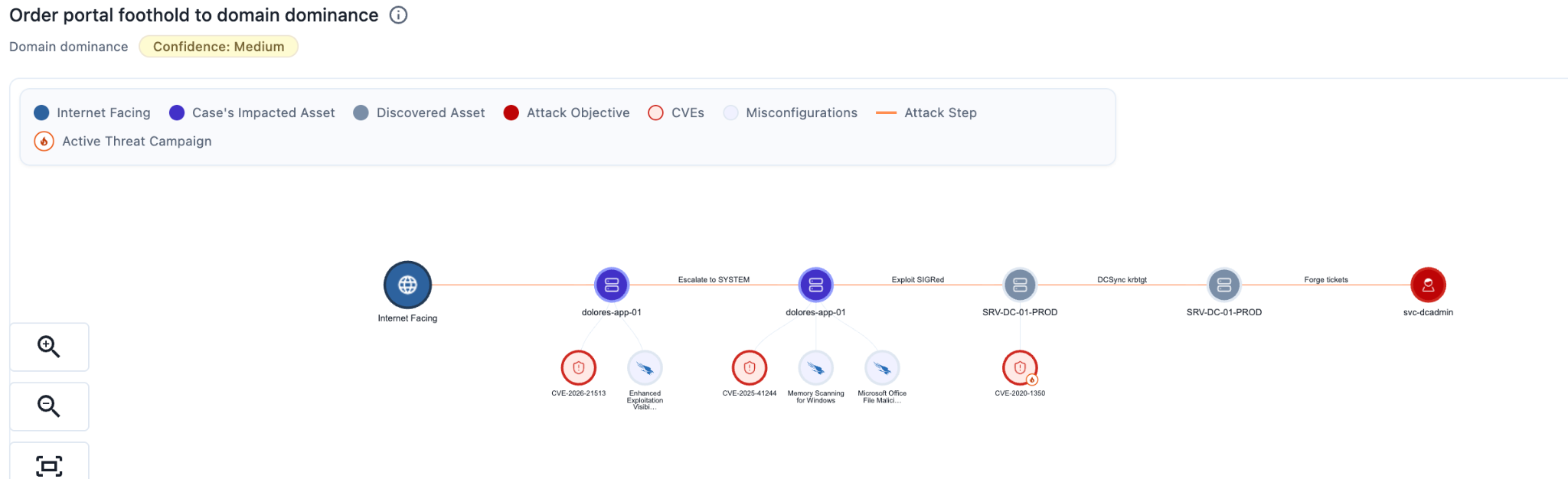
It’s a similar situation when one tool reveals a misconfigured control, another an excessive privilege, and yet another disabled or missing protection. Individually, each gap may be a concern. But the team can’t assess whether the exposure is relevant to their environment and exploitable until the data is brought into one view, analyzed in context, and correlated against the environment.
Exposures emerge from a demonstrable chain of weaknesses that lead to exploitability. Importantly, this isn’t theoretical, like a CISA KEV listing which shows a vulnerability is exploited somewhere in the wild. Exploitability depends on a specific environment’s configurations, controls, and context.
For Nagomi, an accurate assessment starts in the environment itself, showing that the exact conditions an attacker needs are present rather than inferring exploitability from vulnerability data alone.
How Compensating Controls Disrupt an Attack Path Before a Patch
Validation provides evidence about what an investigation finds; evidence allows security teams to decide what happens next. But proving an exposure is exploitable doesn’t mitigate the exposure.
Frequently, a permanent fix takes time. Patching requires testing and a release window. Changing an identity permission may require application owners to determine dependencies. Correcting a configuration can involve several teams and a tedious change-control process. Meanwhile, the conditions that make the exposure exploitable remain while the attackers continue their campaigns. The longer the business takes to respond, the greater the likelihood that the attacker will maintain their advantage.
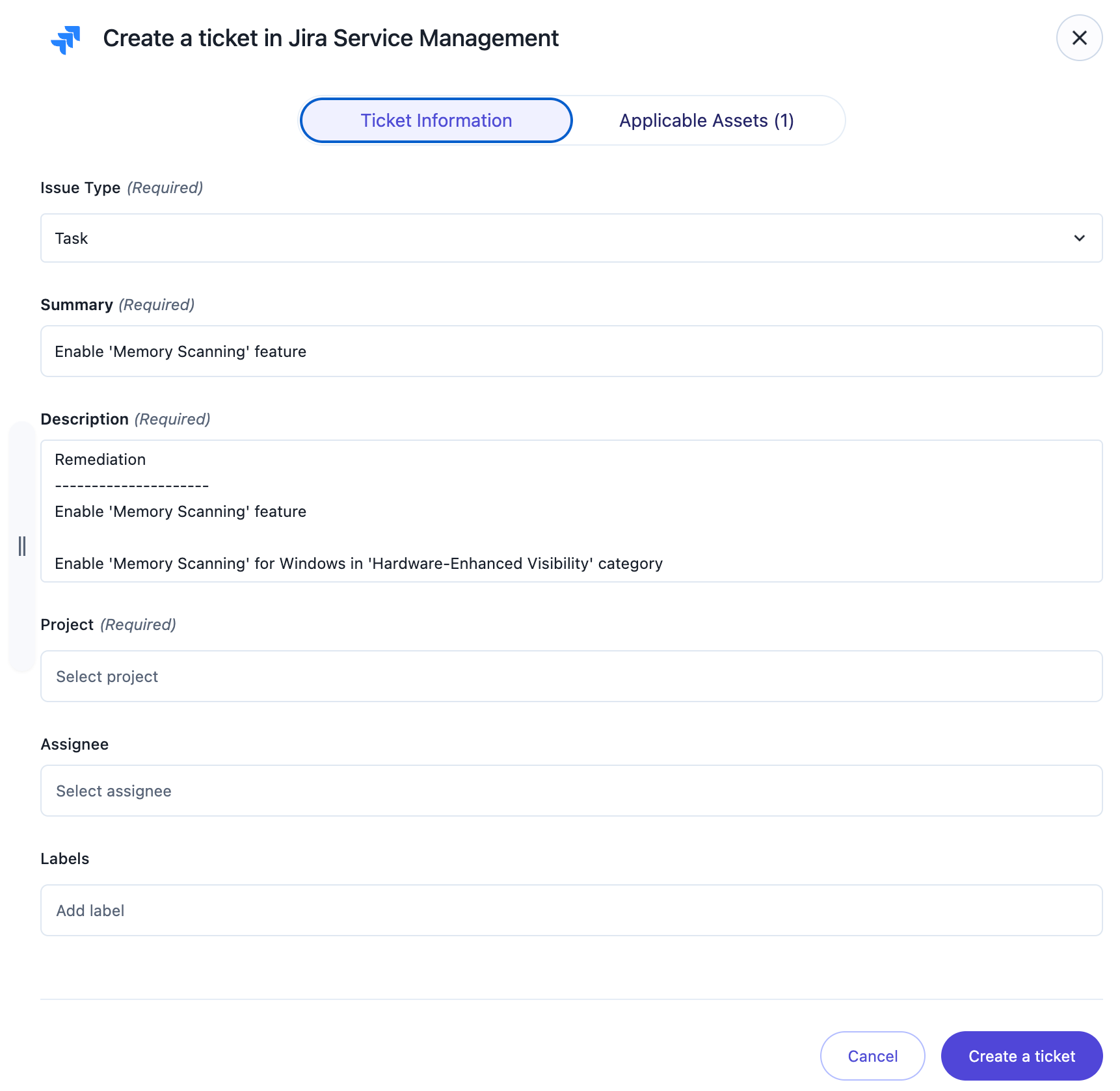
Security teams therefore need a way to disrupt the attack path before the underlying weakness can either be permanently fixed. Disruption requires more than identifying a compensating control. Vendor solutions must be able to accurately identify which controls in a customer’s environment can interrupt the attack path, determine what effect a control change would affect, and say with a high degree of confidence that the change will remove the conditions that facilitate exploitation.
Automated processes connect the evidence from the investigation to those decisions in minutes rather than hours or days. What’s more, agentic workflows automatically drive appropriate remediation, with the objective of preventing the attack from progressing. In some cases, the control change will be enough for the long term. In others, the security team buys itself time to implement the longer, trickier permanent fix.
How Verification Closes the Loop
After a control fix, it’s not enough for security or IT teams to close a ticket. Too many organizations assume the initial fix is the end of the process when, in fact, environmental changes can silently reintroduce exposure. To ensure fixes remain effective, they must be re-validated when a state change occurs. Without that step, a mitigation is an assumption about risk reduction rather than evidence that the exposure no longer exists.
For SecOps and exposure management teams, the result is a shift from finding and prioritizing exposures to managing them through closure. Validate the conditions, disrupt the path, fix the underlying weakness, and verify the path no longer works.
While the Gartner article mentions the need for vendors to include “closure verification” in their roadmap, we at Nagomi think the capability is undersold in terms of the positive effect it has on customers’ exposure operations and risk reduction. Without a platform’s ability for closed-loop remediation verification, risk can be reintroduced again and again, effectively extending analysts’ and operators' extensive queues and inability to respond in time to preempt an attack.
What Agents Handle in Exposure Operations
In today’s AI-driven attack landscape, the only way to drive exposure reduction is through a division of labor; agents can investigate the environment, identify exploitable exposures, document the evidence, recommend a mitigation, and route the work to the appropriate owner. Automated remediation may also be viable. When security teams want to retain control over production changes, agents not only supply the steps for the fix, but detail why and how the response will positively impact risk.
Across 12 customers, Nagomi's agents absorbed an estimated 879 hours of analyst investigation work in their first two weeks..
What Preemptive Exposure Management Needs from a Platform
The next phase of exposure operations won’t be defined by how many exposures a platform finds. It will be defined by whether security teams can prove which exposures matter, act on them before an attacker does, and verify that actions were effective. That requires more than another layer of findings or another risk score. Customers want evidence, the ability to disrupt an active attack path, and continuous verification as new conditions are introduced.
Nagomi delivers that loop today. Our platform correlates asset, identity, control, and threat signals from the tools customers already own; assesses exploitability against live conditions; routes mitigations through approval paths; and continues to validate fixes after closure. Contextual exposure intelligence, evidence of exploitability, governed action, and closure verification are the capabilities Gartner identifies as the next phase of exposure management. Nagomi customers already have them in production.
As evidence of exploitability becomes a standard buying criterion, the question for security teams will shift from what a platform found to what it can prove, what it can change, and how risk is reduced over time. Nagomi was built for that standard.
.png)
_2026-07-22_19-48-22.avif)